

Late on Wednesday (Oct 7, local time), US news website Axios reported, citing US officials, that the Pentagon instructed U.S. Central Command several days ago to complete preparations for resuming large-scale combat operations against Iran.
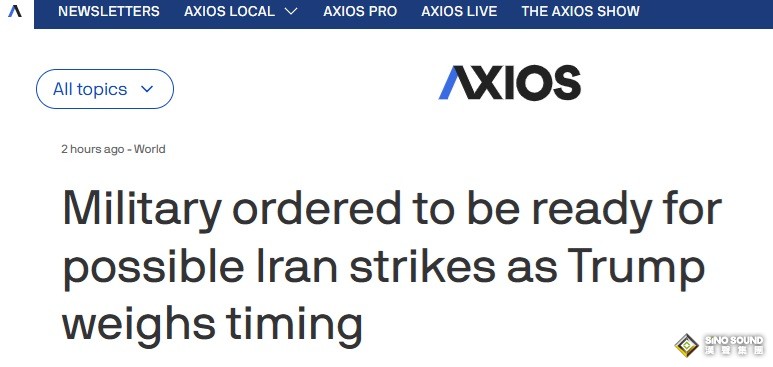
(Screenshot Source: Axios)
Why it matters: The directive does not include a specific date to launch strikes, and US President Donald Trump has not made a final decision. Nevertheless, US and Israeli sources stated military action could take place before the US midterm elections, or even ahead of Israel’s election scheduled one week earlier.
Overview: Sources said if large-scale combat operations resume, they are expected to include heavy bombing of Iran’s energy facilities, infrastructure and nuclear targets.
Should hostilities escalate again within the next three to four weeks, it may impact the US midterm elections, largely because oil prices would likely rise.

A Pentagon official told Axios: “The Department of Defense’s job is to develop military options and present those options to the President.”
A White House official said Trump retains all available options at all times.
The official stated: “The United States is in a very strong position right now, controlling the Strait of Hormuz, while Iran’s economy is collapsing. Iran has already been badly hit. From here, things can only go one of two ways: either the easy path or the hard path.”
He added: “President Trump holds all the cards and will take whatever action best serves US interests.”
The Atlantic reported earlier on Wednesday that Trump is weighing whether to launch strikes against Iran before the US midterm elections.
Trump’s National Security Team Held Hours-Long Closed-Door Meeting
Last Friday, Trump’s national security team met for several hours at Camp David to discuss war and other topics.
An Israeli official told Axios that part of the discussion focused on whether to resume large-scale military operations against Iran.
US Secretary of State Marco Rubio said after the meeting that the session centered on “long-term” foreign policy planning.
Meanwhile, negotiations between the United States and Iran have made no progress. Qatari mediators are still waiting for Iran’s response to a US counter-proposal that includes demands for concessions from Iran on nuclear issues.
A second Israeli official said: “Discussions about the possible resumption of large-scale operations against Iran are increASIng. The probability of action before the elections is not high, but we will not rule it out. After the midterm elections, the odds of this happening will rise significantly.”
Trump and Netanyahu Spoke Twice Within Days
Behind the scenes, Trump spoke with Israeli Prime Minister Benjamin Netanyahu on Wednesday. It marked their second call in a matter of days, after almost no communication in the preceding weeks.
A US official said Trump and Netanyahu discussed “honoring and remembering the victims of the October 7 massacre.”
The first Israeli official said the call came after Netanyahu held a meeting with his national security team on Iran.
Netanyahu also spoke with Rubio on Monday.
If large-scale operations against Iran resume, the United States and Israel will most likely act in coordination, with the Israeli military taking direct part.
Two Israeli officials said the Iranian regime is currently “desperate and highly suspicious,” which may prompt it to strike preemptively.
They noted Iran has already endured two surprise attacks and does not want to suffer a third.
If Iran Retaliates, Hundreds of Ballistic Missiles Could Be Fired at Israel
Notably, renewed war could also impact Israel’s election, as Iran may retaliate by launching hundreds of ballistic missiles toward Israel.
A fresh escalation — or even just rising tensions and a state of emergency — could politically benefit Netanyahu and make it harder for his political opponents to attack him in the final phase of the campaign.