

ASIa Desk News. Bloomberg released an exclusive report on Monday (Sep 28), citing people familiar with the matter that Iranian officials privately hold a pessimistic view on reaching an agreement with Washington to end hostilities and reopen the Strait of Hormuz before the US midterm elections in November.
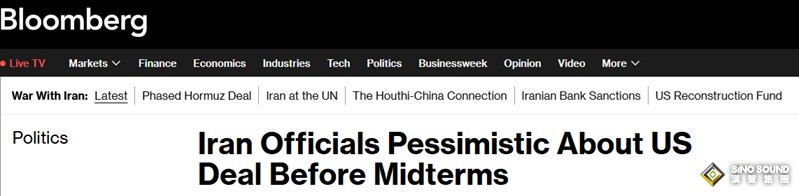
(Screenshot Source: Bloomberg)
Sources said little progress was made during the talks between Iran and the United States on the sidelines of the UN General Assembly in New York last week. Iran believes there is a high risk of further conflict escalation after the US midterm elections conclude on November 3.
Some of the sources were briefed by Iranian officials and requested anonymity due to the sensitive nature of the discussions.
Iranian officials have repeatedly stated their willingness to resolve issues through diplomacy, yet they do not trust that President Donald Trump’s administration will honour the terms of any deal. The White House holds similar distrust toward Tehran. Trump has previously voiced doubts that the two sides can strike any agreement before the midterms.

A US official said Washington remains engaged in constructive consultations with Iran via mediators, yet no deal will be reached unless issues related to Iran’s nuclear programme are resolved.
The official, who requested anonymity to discuss the sensitive negotiations, stated Trump is prepared to offer sanctions relief and release frozen Iranian funds if Iran delivers tangible progress on nuclear issues.
A source said Iranian Foreign Minister Abbas Araghchi remains in the United States for continued consultations after meeting Trump’s envoys Jared Kushner and Steve Witkoff last week. All further discussions between the warring parties will proceed through mediators.
Iran’s semi-official news agency ISNA reported that talks involving Araghchi were scheduled for Monday to review recent proposals and exchange views on the current situation. US representatives would not attend this meeting.
Major mediators are now seeking an arrangement different from the Memorandum of Understanding (MOU) signed by Iran and the United States in mid-June this year.
The earlier MOU brought about a ceasefire and allowed more maritime traffic through the Strait of Hormuz. However, the arrangement collapsed after roughly two weeks, before the two sides could make substantial progress toward a permanent peace accord.
Pakistan and Qatar have served as the primary mediators throughout the intermittent negotiations.
The prior MOU drew widespread criticism from US politicians, who argued Washington made excessive financial concessions to Iran, especially on sanctions relief. Meanwhile, Iran continued to restrict vessel passage through the Strait of Hormuz, and shipping volumes remained far below pre-war levels.
Two people familiar with the matter told Bloomberg that the US administration has informed mediators that Washington wants explicit commitments from Iran to reopen the Strait of Hormuz alongside concessions on its nuclear programme this time.
A spokesperson for Iran’s foreign ministry did not immediately respond to requests for comment.
The Wall Street Journal previously reported negotiators are urging Iran to compromise on its nuclear programme to restart peace talks and address Trump’s top concerns on this matter.
Iranian President Masoud Pezeshkian stated in his address to the UN General Assembly last week that Iran does not seek to build nuclear weapons, yet it will not surrender its right to develop nuclear technology for economic purposes.
Tehran has put forward a proposal: Iran can reopen the Strait of Hormuz within seven days if Washington takes certain actions. Iranian leaders previously stated progress on allowing more vessels through this vital waterway would require the United States to lift its maritime blockade and oil sanctions on Iran.
Trump said last Saturday he had rejected this proposal.
As market expectations for a deal over the Strait of Hormuz cooled, oil prices rose on Monday, with Brent crude jumping as much as 2% to roughly $106.20 per barrel.
Energy prices have surged since the United States and Israel launched the war in late February, putting pressure on Trump and the Republicans as the US midterm elections draw near. Democrats are widely expected to gain more seats in the election.