

Gold markets cooled notably during Tuesday’s ASIan session, with spot gold retreating to around $4,445 per ounce as consecutive upward momentum faded. This correction stems not merely from eBBIng safe‑haven demand, but from markets reassessing the Federal Reserve’s future interest‑rate path. Amid escalating Middle‑East tensions driving higher energy prices, investors fear elevated energy costs could reignite inflation pressures and limit scope for the Fed to ease monetary policy.
Recent Middle‑East developments have turned volatile again, with renewed military exchanges between the United States and Iran sharply focusing attention on energy supply and global crude prices. Rising oil prices add risk premiums to crude markets while potentially passing through to end‑user prices via fuel, transportation and production costs. For gold, this creates complex dynamics: geopolitical risks generally favour safe‑haven assets. Yet when risk events first lift energy prices and amplify inflation expectations, forcing the Fed to keep rates higher, upward moves in the US dollar and Treasury yields may offset gold’s safe‑haven appeal.
Market focus has shifted from pure geopolitical risk toward Fed policy expectations. Federal Reserve Chair Kevin Warsh delivered relatively tough inflation signals at the Jackson Hole Symposium, stressing price stability remains monetary policy’s core objective and stating current inflation progress is not sufficient to fully reassure policymakers. His remarks prompted investors to price in higher odds of subsequent rate increases. Traders now assign roughly 65.4% probability to a rate hike at the September Fed meeting, sharply up from approximately 39.9% prior to his speech. This marks a substantial shift in near‑term rate expectations. For non‑interest‑bearing gold, rising rate expectations increase opportunity costs of holding bullion and tend to weigh on prices.
Notably, inflation risks have not fully faded. Though recent US inflation data showed signs of cooling, resurgent energy costs may alter inflation trajectories over coming months. Sustained crude strength pushing US gasoline and transportation expenses higher could fuel worries over slower inflation deceleration. Under such circumstances, even without immediate rate hikes, the Fed may extend the duration of high interest rates, which also pressures gold valuations. Several institutions view Warsh’s recent policy messaging as distinctly hawkish. Rajiv de Mello, Global Macro Portfolio Manager at GAMA Asset Management, stated the shift toward a more hawkish stance took many investors by surprise, meaning gold may face near‑term headwinds. This encapsulates gold’s primary short‑run dilemma: geopolitical risks lift safe‑haven value, while rising rate expectations raise holding costs.

Meanwhile, the US dollar has regained support. The Fed’s firm stance on inflation helps keep yields on dollar‑denominated assets elevated. For dollar‑priced gold, a stronger US dollar raises purchASIng costs for non‑dollar investors and places additional downward pressure on bullion. Therefore, any potential gold rebound depends not only on geopolitical developments but also on visible pullbacks in the US Dollar Index and US Treasury yields.
Nevertheless, gold’s medium‑term technical structure has not fully deteriorated. On the daily timeframe, XAU/USD trades above the 100‑day moving average near $4,370 and hovers around the 20‑day moving average close to $4,430. The 20‑day MA continues to offer support, indicating the prior medium‑term uptrend remains intact. The RSI currently stands near 54, in a neutral‑to‑bullish zone, showing cooling momentum without clear bearish dominance.
From a daily chart perspective, $4,430 represents one of the most important near‑term support levels, sitting close to the 20‑day MA and marking a zone where bulls and bears have recently rebalanced. Should gold stabilise above $4,430 and break back above $4,500, markets may retest resistance near $4,600. Further upside targets lie within the $4,700‑$4,725 band near the upper BOLLinger Band, expected to act as a major hurdle for bullish advances. Conversely, a decisive break below $4,430 could trigger a retest of the 100‑day moving average around $4,370. Loss of the 100‑day MA would open deeper correction toward $4,200‑$4,140.
On the 4‑hour timeframe, gold’s short‑term profile has shifted from sharp rally to choppy weakness. Having broken its short‑term upward rhythm, bulls need to locate fresh support. The $4,430‑$4,440 zone constitutes a critical battleground. A quick reclaim of $4,500 would suggest current pullback is a technical correction within the broader uptrend, paving the way for retests of $4,550‑$4,600. Sustained trading below $4,430 risks extending near‑term weakness toward $4,370. Short‑term momentum indicators have cooled, yet no signals confirm a medium‑term trend reversal. Focus should therefore remain on breakout behaviour at key support and resistance levels rather than concluding trend reversal outright.
Going forward, monitor upcoming Fed official speeches, US inflation prints, labour‑market data, the US Dollar Index and 10‑year Treasury yields. Resurgent inflation pushing rate‑hike expectations higher would keep gold under valuation pressure. Weaker economic data alongside receding rate expectations and peRSIstent geopolitical risks could allow safe‑haven demand to regain the upper hand.
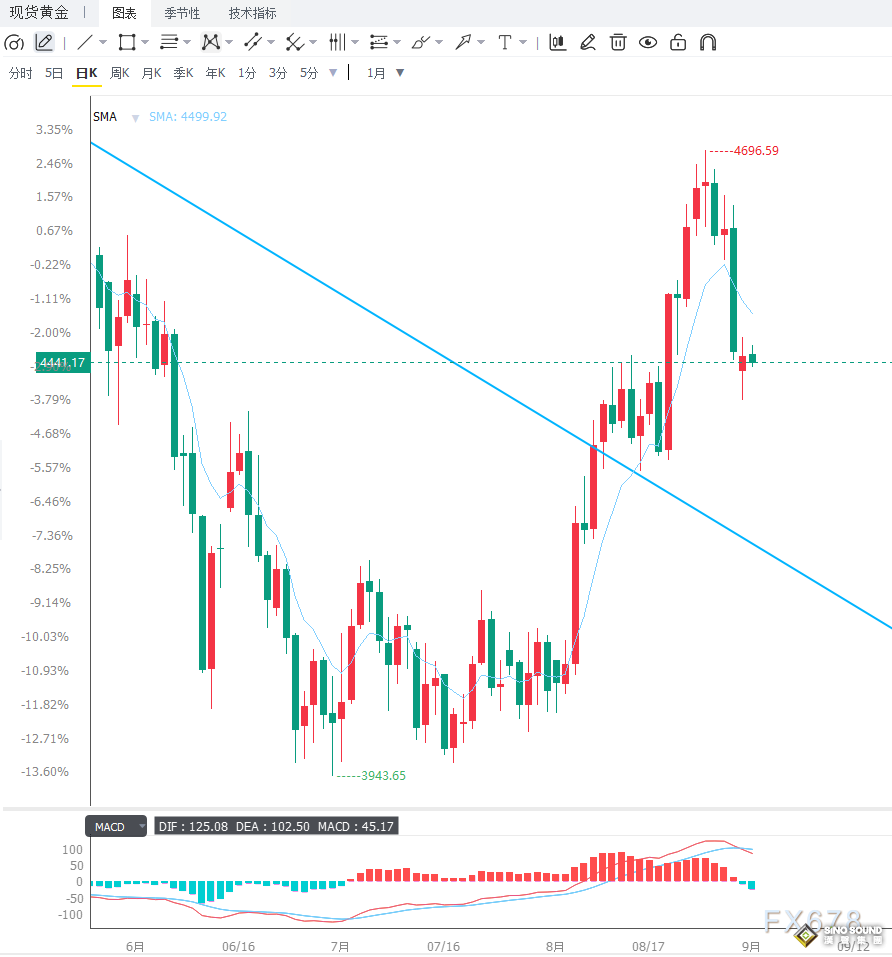
Gold’s core conflict has evolved from pure safe‑haven demand into a tug‑of‑war between safe‑haven appeal and interest‑rate expectations. Escalating Middle‑East tensions ought to bolster gold’s attractiveness, yet inflation risks stemming from higher oil prices reinforce expectations for sustained or even higher Fed rates, making the dollar and Treasury yields major headwinds. Markets will keep close watch on US inflation, employment figures and Fed policy signals, alongside whether oil‑price gains truly feed through into inflation expectations. Gold retains medium‑to‑long‑term safe‑haven and portfolio‑allocation value, though near‑term performance will hinge heavily on real‑rate, dollar and monetary‑policy shifts. Investors should prepare for elevated volatility driven by macro repricing.