

As subtle signs of de‑escalation emerge amid military stand‑offs in the Strait of Hormuz, US President Trump declared on Tuesday that all naval mines in the international waters of this strategic waterway have been cleared or detonated. Meanwhile, the US State Department began redeploying staff to some Middle‑East diplomatic missions. These developments mark a limited cooling of US‑Iran tensions since February this year, yet paths toward diplomatic resolution remain deadlocked.
On Tuesday (August 25), Brent crude futures closed down $3.59, or 3.9%, settling at $88.58 per ounce, hitting the lowest level since August 14. US crude futures fell $2.65, or 3.1%, to settle at $82.36 per barrel, a low since August 13. During early ASIan trading hours on Wednesday (August 26), international oil prices extended losses. US crude once dropped 2.46% to $80.33 per barrel, while Brent crude fell 1.89% to $85.14 per barrel, both hitting fresh near‑two‑week lows.
Mine Clearance and Temporary Shipping‑Lane Initiative

In a Tuesday statement, Trump announced all mines within international waters of the Strait of Hormuz had been cleared. He warned Iran against re‑laying mines, adding any vessel laying mines would be destroyed. This statement echoed prior joint‑action intentions reached between Iran and Oman.
Iran confirmed it has resumed consultations with neighbouring Oman. The two sides are discussing opening a “joint temporary shipping lane” across the Strait of Hormuz and agreed to coordinate mine‑clearing operations within the strait. For several weeks, Iran and Oman have held intermittent rounds of negotiations over shipping governance for this world’s most critical energy artery. The Strait of Hormuz handles roughly one‑third of global seaborne oil trade; any disruption to passage would deliver an immediate shock to global energy supplies.
Signals Sent by Returning Diplomatic Staff
According to two people familiar with the matter, the United States has initiated procedures to redeploy personnel to select Middle‑East diplomatic posts. The redeployment covers missions in Lebanon, Israel, Saudi Arabia and Baghdad, Iraq. Previously‑evacuated family members are also permitted to return to the US mission in Riyadh, Saudi Arabia.
Sources state initial staffing for some embassies will be capped at 85% of authorised levels, with adjustments to follow subject to security conditions. The New York Times reports US embassies in Jordan, Oman, Kuwait and Qatar are also expected to boost staffing levels. Under the plan, embassies in Israel, Jordan and Oman will eventually resume full‑strength operations; missions in the UAE, Saudi Arabia, Qatar and Lebanon will operate at an initial 85% staffing capacity, while posts in Iraq, Kuwait and Bahrain will be limited to 75%.
A State Department Spokesperson noted via emailed statement that the department continuously assesses security conditions for diplomatic missions worldwide. Staffing decisions respond to evolving security environments, and safeguarding the safety of diplomats and their families remains the top priority. This round of diplomatic drawdowns began in February, when Washington authorised voluntary evacuation of non‑emergency staff and family members from its Israeli mission amid heightened tensions with Iran.
US Secretary of State Rubio recently briefed foreign ministers of allied nations that the US will “temporarily” withhold new military strikes against Iran and pursue alternative pressure tools. This marks a shift from the Trump administration’s earlier threats of “massive bombing” against Iran and further confirms Washington’s preference for containing conflict intensity for the time being.
Tanker Attacks and Unresolved Navigation Risks
Despite diplomatic openings, actual navigation safety inside the Strait of Hormuz remains far from reassuring. The UK Maritime Trade Operations (UKMTO) reported on Tuesday that a tanker was struck by an unknown projectile roughly nine nautical miles (17 kilometres) northeast of Ash‑Shihr, Oman, and became disabled. The incident took place near the entrance to the Strait of Hormuz. It underscores that commercial shipping transiting the waterway still faces tangible threats even as overt hostilities between the United States and Iran subside temporarily.
Overlapping Information Warfare and Sanctions Rivalry
While military confrontation cools, rhetorical battles and economic‑sanctions manoeuvres continue to heat up. The US Secret Service stated on Tuesday it had taken note of a three‑minute video broadcast on Iranian state television discussing a potential assassination plot targeting Barron Trump, son of US President Trump. The video claimed the 20‑year‑old was under surveillance and alleged a $10‑million bounty had been placed on his life. This development injects fresh uncertainty into bilateral tensions.
On the economic front, the United States threatened earlier this week to penalise countries continuing to conduct business with Iran to further weaken its economy, yet added it would not immediately enforce sanctions. Iran condemned US efforts to isolate its economy as “blatantly unlawful” and expressed confidence most nations would not join pressure campaigns. Notably, international oil prices fell for a second consecutive day despite Washington’s latest sanctions threats, showing traders are not pricing in near‑term impacts from US sanctions.
Statements over mine clearance inside the Strait of Hormuz, consultations on temporary shipping lanes, alongside US diplomatic‑staff redeployment and Rubio’s remarks postponing new military strikes, signal a phase‑wise de‑escalation of US‑Iran confrontation. Nevertheless, tanker attacks and the assassination‑discussion video aired by Iranian state‑run media remind all parties that risks to strait navigation safety and hostage‑style political games remain unresolved. While redeploying staff, the United States keeps its sanctions‑pressure framework intact. Iran, for its part, pursues cooperation over shipping‑lane governance yet maintains rhetorical push‑back against the US. Both sides retain leverage for potential escalation amid limited détente. Muted oil‑market reactions to sanctions threats reflect market caution over the trajectory of US‑Iran friction. Attention now turns to whether the Oman‑brokered temporary‑shipping‑lane agreement can be implemented on the ground, and whether de‑escalation signals conveyed by returning US diplomatic staff can translate into broader diplomatic engagement.
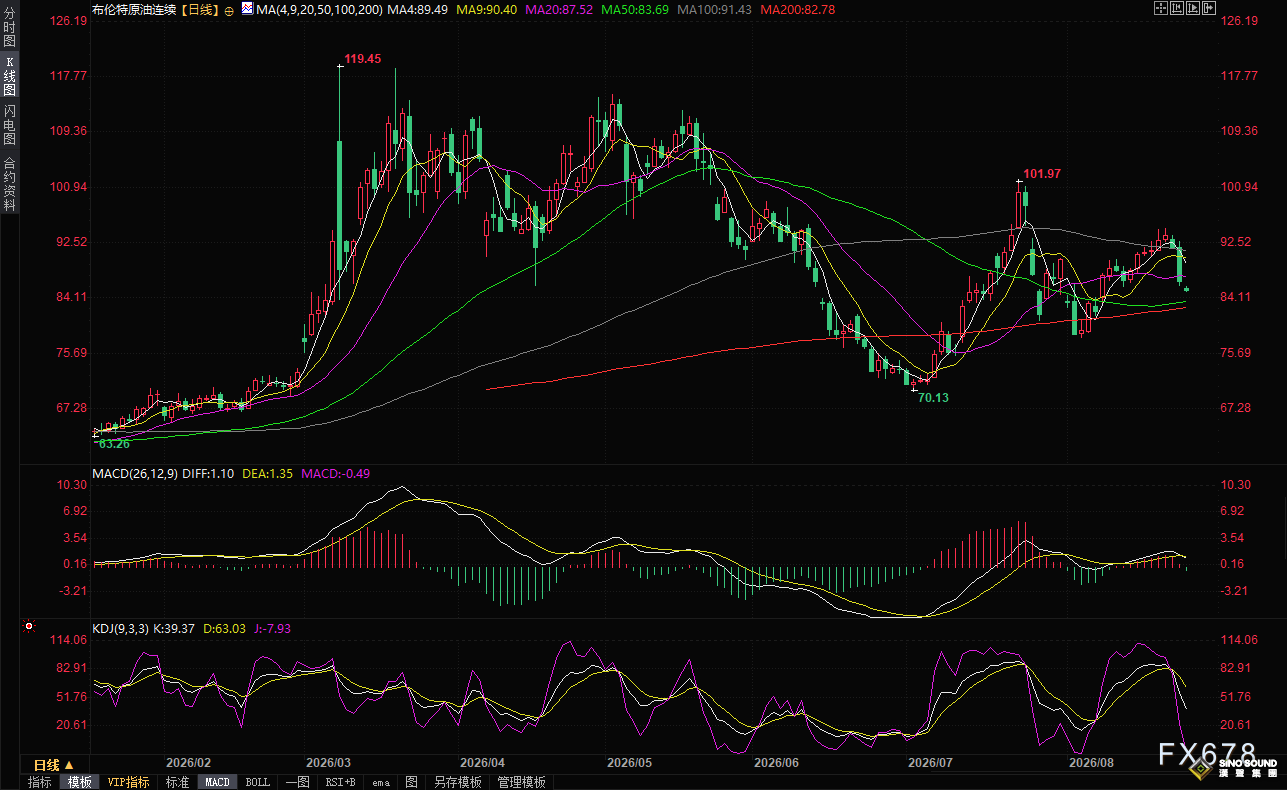
(Brent Crude Daily Chart, Source: Yihuitong)