

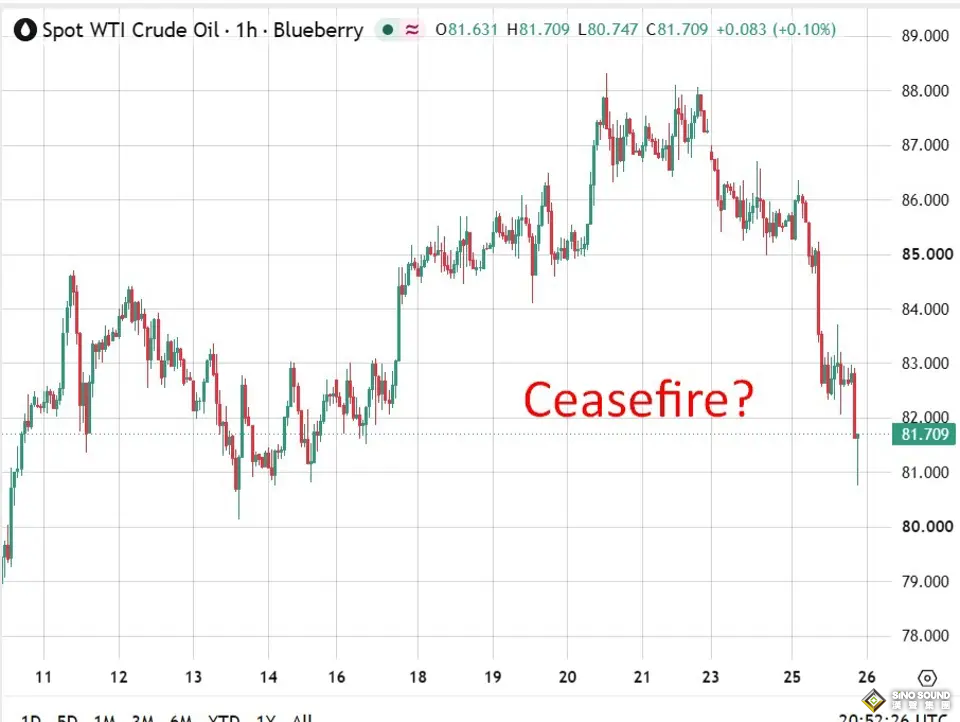
News Report: Iran and Oman held consultations on Tuesday over future shipping arrangements in the Strait of Hormuz, covering proposals for a temporary joint waterway and mine‑clearing operations across the strait. Meanwhile, unconfirmed reports claiming the US and Iran had reached consensus on cease‑fire terms triggered an almost 6% plunge in international oil prices. To date, neither Washington, Tehran nor major global news agencies have validated the reports, and markets await credible official confirmation. #IranCrisisTracking#
(Source: InvestingLive)
Iran and Oman Discuss Temporary Shipping Lane and Mine‑Clearing Operations
Omani Foreign Minister Sayyid Badr bin Hamad Albusaidi stated he expected formal announcements soon regarding a shipping corridor for the Strait of Hormuz and “practical arrangements for restoring safe navigation”. He described talks held in Tehran with Iranian Foreign Minister Abbas Araghchi as constructive.
On social‑media platforms, Albusaidi noted follow‑up discussions would cover long‑term governance mechanisms and permanent solutions for the strait. Oman will keep engaging regional partners to advance peace, cooperation, regional stability and freedom of navigation.

A post‑meeting statement from Oman’s Foreign Ministry confirmed the current framework under discussion with Iran includes a joint plan to clear mines from the Strait of Hormuz. Muscat and Tehran will continue negotiations to finalize permanent shipping routes and strait‑management mechanisms.
Notably, the proposed mine‑removal plan outlined by Oman appears inconsistent with earlier remarks from Donald Trump, who stated he had been advised by the US Navy that all mines laid within international waters of the Strait of Hormuz had already been cleared.
Under the memorandum of understanding signed by Iran and Oman on June 17, the two sides originally planned negotiations covering “future governance and maritime services” for the Strait of Hormuz. These temporary arrangements quickly stalled, however, following subsequent US‑Iran confrontations over shipping access.
US military forces currently offer protection for vessels sailing along shipping lanes south of Oman’s coastline. US Central Command reports more than 660 million barrels of crude oil have transited the Strait of Hormuz under its protection since May.
Iran insists vessels should use the northern route passing through its territorial waters, warning ships risk attack otherwise.
Security Risks PeRSIst Across the Strait of Hormuz
Despite signs of diplomatic progress, security conditions within the strait remain tense.
Incident logs released by the UK Maritime Trade Operations (UKMTO) show an oil tanker was struck by an unknown object off Oman on Monday and left incapacitated. Two further cargo vessels came under attack inside the Strait of Hormuz last week, killing two crew members.
Meanwhile, US economic pressure on Iran continues to escalate. One day ahead of the Oman‑Iran talks, US Treasury Secretary Scott Bessent announced the United States would impose sanctions against any entity conducting business with Iran.
This means that while diplomatic consultations over strait governance and shipping access have resumed, political and economic confrontation between the United States and Iran remains unresolved.
Unverified US‑Iran Ceasefire Rumors Hit Markets, Oil Prices Tumble
The biggest market swing on Tuesday stemmed from unconfirmed cease‑fire reports.
Russian state news agency RIA Novosti cited sources within Pakistan’s military and Iranian security services claiming Washington and Tehran had reached consensus on a cease‑fire accord, including guarantees for free navigation through the Strait of Hormuz, with a formal announcement expected in coming days.
Shortly after the story broke, both Brent and WTI crude fell roughly USD 2 within about one hour, extending pre‑existing losses.
Major uncertainty still hangs over the report.
At the time of publication, leading international news outlets including Reuters, Bloomberg and Associated Press had not corroborated the cease‑fire claims. No formal statements were released by US, Iranian or Gulf‑state governments. Iranian official media IRNA and Press TV also failed to confirm the story.
Since Russia is not a direct participant in ongoing US‑Iran negotiations, the fact that Russian media broke news of this purported major diplomatic breakthrough has prompted caution among many traders regarding source credibility.
Pakistan has previously acted as a mediator during US‑Iran hostilities, so reports citing Pakistani military channels are not entirely implausible, yet official verification is still absent.
Oil Prices Had Already Declined for Three Consecutive Sessions
Tuesday’s sharp sell‑off did not emerge from elevated price levels alone.
International crude benchmarks had weakened across three straight trading days this week, down roughly 5% from last week’s highs. For one thing, traders judged Washington’s latest sanctions targeting Iran’s trade partners less stringent than previously anticipated. In addition, market‑wide risk‑premium compression peRSIsted amid reports of Pakistani‑backed mediation between the United States and Iran.
Accordingly, rumors of a finalized cease‑fire landing on an already soft market amplified price moves.
Market analysis notes current oil prices still embed substantial geopolitical risk‑premium tied to the Strait of Hormuz. Any news relating to cease‑fire progress, restored free navigation or reduced military threats is capable of triggering rapid price swings.
Nevertheless, viewed against the limited verification available at present, the near‑USD 2 rapid drop may overstate the degree of factual confirmation behind the rumors.
Traders will now closely watch whether Reuters, Bloomberg and other major newswires plus US and Iranian official sources confirm or deny the reports. Should the purported US‑Iran cease‑fire remain unvalidated, oil prices face risks of a sharp rebound.