

After US Treasury Secretary Scott Bessent announced an expansion of long‑term Treasury buy‑backs this week, Ray Dalio, founder of Bridgewater Associates, issued an even stern warning. He believes US fiscal conditions have reached a “tipping point”. Treasury market intervention, surging long‑dated Treasury yields, and reduced foreign exposure to US Treasuries together signal that a potential debt crisis is drawing near.
In a LinkedIn post on Friday, Dalio wrote: “I am convinced that the government’s financial condition is at a tipping point. If not addressed now, debt will build up to levels that cannot be resolved without great trauma.”
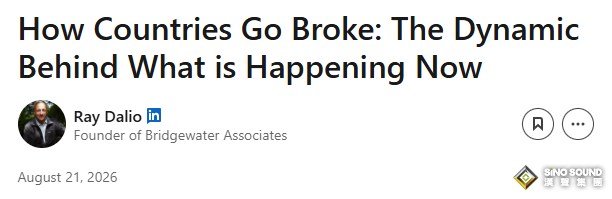
(Screenshot from LinkedIn)
In his view, without changes to the current fiscal path, a debt crisis could strike as soon as one year away or as late as roughly five years. His personal baseline estimate is “about three years, plus or minus two years”.

Treasury Buy‑Backs Send Ominous Signals
Bessent announced expanded long‑term Treasury buy‑backs this week, noting individual operations may exceed the previously‑proposed $4‑billion threshold. The Treasury aims to improve liquidity in the long‑bond market and ease pressure from climbing long‑end yields.
Dalio, however, argues the Treasury’s capacity to stabilise bond markets via buy‑backs is very limited.
US long‑dated Treasury yields have marched higher recently. The 30‑year yield hit around 5.28% on Friday and touched multi‑year highs unseen since 2007 earlier this week. Meanwhile, Japan is trimming some of its US‑bond exposure, fuelling worries over weakening foreign demand for American government debt.
Dalio points out that growing reliance on official intervention to prop up bond markets itself suggests the fiscal‑debt system is nearing a critical juncture.
US “Spends 40% More Than It Takes In”
Dalio traces the root problem to stark fiscal imbalance: US government outlays are roughly 40% above revenues.
The US July budget deficit topped $432 billion. While Bessent says deficits may have peaked under the Trump administration and that the government is exploring multibillion‑dollar spending cuts, Dalio believes meaningful cuts will be hard to deliver. Large portions of government spending are either committed or deemed untouchable essential outlays.
After years of cumulative deficits, total US debt far exceeds one year of government revenue.
Drawing a corporate‑finance analogy, Dalio notes that debt‑service costs — principal repayments plus interest — could reach about $11 trillion, equivalent to around 200% of annual government income.
Compounding his concern, rising debt principal combined with peRSIstently high interest rates will push debt‑service expenses even higher in future periods.
Dalio Calls For A Three‑Pronged Approach
To avert a debt‑crisis outcome, Dalio maintains the US must pursue three parallel courses to bring the fiscal deficit down to roughly 3% of GDP.
First: cut government spending. Second: raise tax receipts. Third: bring interest rates lower. He stresses all three must move together; no single lever should be over‑relied upon.
Heavy‑handed spending cuts alone could crater the economy; excessive tax hikes may suppress growth; artificially forcing rates lower would risk severe monetary‑inflation side‑effects, Dalio warns.
He specifically cautions the Fed should not artificially suppress interest rates purely to ease government debt burdens, as this would sow new financial imbalances.
Acting now is especially critical while the US economy remains relatively healthy, Dalio argues. Should recession arrive, counter‑cyclical fiscal stimulus will become necessary, making fiscal consolidation far more difficult.
Debt Crisis Could Hit Within One Year?
Dalio does not give an exact timeline for when a full‑blown US debt crisis may materialise.
Wars, political shifts and economic cycles can bring the crisis forward or push it further out, he notes.
Under current fiscal trajectories, severe debt pressure could emerge as early as one year or as late as five years.
“My guess — and it could be a bad guess — is roughly three years, plus or minus two.”
This assessment means US fiscal risk is no longer a distant multi‑decade problem, but a core market variable investors may face within the current economic and market cycle.
Underweight Bonds; 10‑15% Portfolio Allocation To Gold
Against this backdrop, Dalio once more advises investors to scale back exposure to debt‑based assets, conventional bonds in particular.
With government‑debt swelling and purchASIng‑power risks mounting, bonds — assets dependent on issuers’ future repayment capacity — carry rising risk, in his view.
By contrast, he recommends allocating roughly 10‑15% of portfolios to gold and holding “a small amount” of Bitcoin to hedge sovereign‑debt and currency‑devaluation hazards.
Gold is not a liability of any government or corporation, granting it unique safe‑haven appeal amid rising sovereign‑credit risk. Bitcoin is viewed by many investors as another scarce asset decoupled from the traditional financial system.
Dalio’s latest warning lands amid sharp swings across US financial markets. Surging long‑dated Treasury yields have weighed heavily on US equities this week, ending the S&P 500’s three‑week winning streak.
In summary, Bessent’s expanded Treasury buy‑back programme was meant to stabilise bond markets. For Dalio, however, it instead underscores mounting stress across US fiscal and debt markets. Without simultaneous progress on spending restraint, revenue growth and lower funding costs, debt risks may evolve from a long‑term concern into a systemic force moving US Treasuries, the US dollar, gold, Bitcoin and global asset prices in the years ahead.