

The spot gold market is frequently disturbed by noise and pullbacks, which may mislead investors into mistaking short‑term rebounds for sustained gold price uptrends and result in losses from blind entries. As the cornerstone of technical analysis, Dow Theory helps investors perceive market nature. Understanding the value of trends, key features of a full‑fledged uptrend and practical judging tools is particularly vital for gold trading.
I. Identifying Trends: Core Premise for Trading Decisions
According to Dow Theory, markets move in three types of trends: primary trends, secondary pullbacks and daily noise. Intraday short‑lived spikes in spot gold prices mostly belong to short‑term noise without sustainability. Distinguishing genuine gold price uptrends helps avoid traps of treating rebound pullbacks as bull markets and improves trading win rates by trading along the primary direction. Betting against major trends may bring short‑term profits, yet gains can eASIly be wiped out by intermediate pullbacks, which is the root cause of repeated losses for many investors.
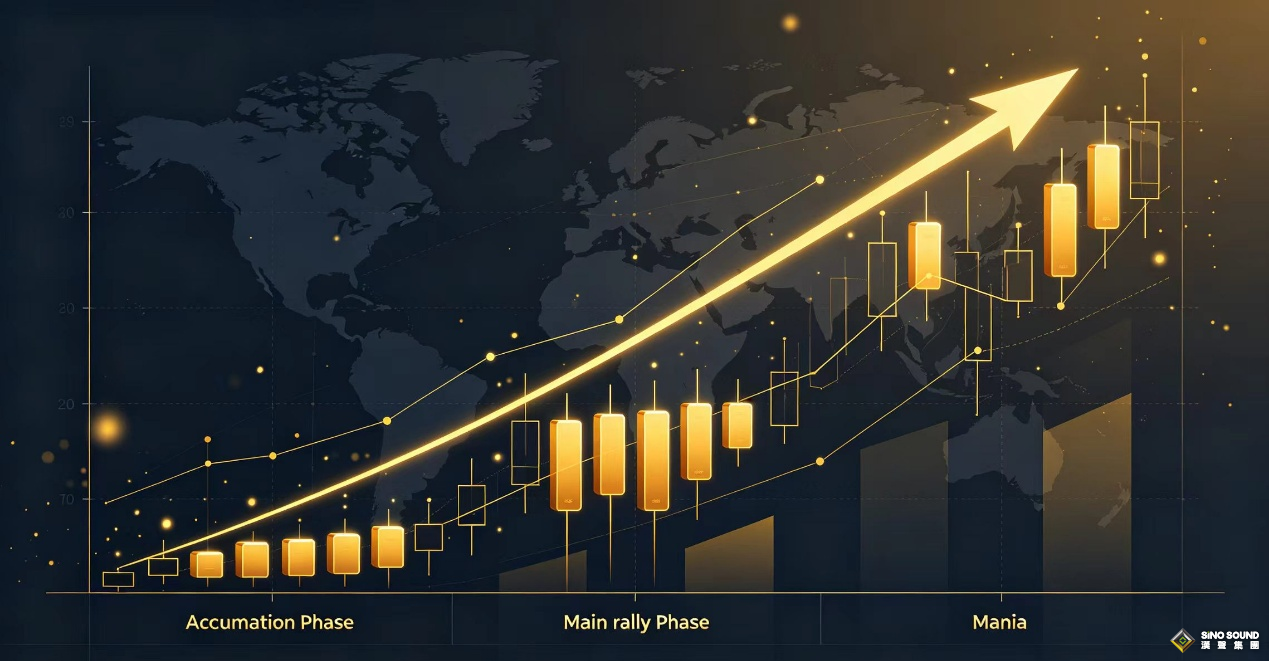
II. Core Features of a Complete Uptrend
A complete primary gold price uptrend features successively higher highs and higher lows, with pullbacks failing to break previous key troughs. Dow Theory divides a full bull cycle into three phases: accumulation, main advance and mania. In the accumulation phase, market sentiment remains pessimistic while capital builds positions quietly. The main‑advance phase delivers steady price gains and serves as the prime trading window. In the mania phase, broad bullish sentiment prevails and risks gradually build. Secondary retracements will emerge along the way, yet pullback lows keep rising and new highs are set after pullbacks to sustain the intact uptrend. Lower highs and broken lows signal potential trend reversal.
III. Practical Technical Tools for Trend Identification
Retail investors can apply Dow Theory with practical tools. First, observe high‑low structures and compare closing‑price sequences to confirm higher‑high and higher‑low patterns. Second, draw trendlines connecting pullback lows as support to verify trend continuity. Moreover, moving average (MA) systems filter market noise; upward‑sloping long‑period moving averages confirm primary bullish conditions. Volume logic serves as additional validation: expanding volume during rallies and shrinking volume during pullbacks verify trend authenticity. Cross‑checking multiple signals reduces misjudgements caused by single indicators and improves capture of trading opportunities within spot gold uptrends.
In short, Dow Theory focuses on recognizing established trends rather than forecasting price levels. When facing spot gold uptrends, investors should avoid being misled by single‑day fluctuations. Confirm complete bullish structures, cross‑validate via technical tools and prioritize trading in line with primary trends to achieve more rational trades.

[Copyright Notice]This article is original content and is protected by applicable copyright laws. Any reproduction, distribution, citation, or use of this content must clearly acknowledge the original source:
Gold2U
www.gold2u.com
We reserve all rights and may take legal action against any individual or entity that fails to comply with this notice or otherwise infringes our intellectual property rights.