

London Gold is denominated in US dollars and earns no interest. Its pricing core lies not in "how much gold is worth", but in "what investors give up to hold gold". When the Federal Reserve sends dovish signals, US dollar credit expands and real interest rates fall, making interest-free gold relatively cheap. When policy turns hawkish, yields on cash and short-term US Treasuries rise, increASIng the opportunity cost of holding gold. Therefore, every FOMC rate decision is ostensibly an interest rate adjustment, yet essentially reshaping the "opportunity cost benchmark" for global assets.
Eight Policy Meetings a Year: Predictable Schedule, Market Pricing on Divergences
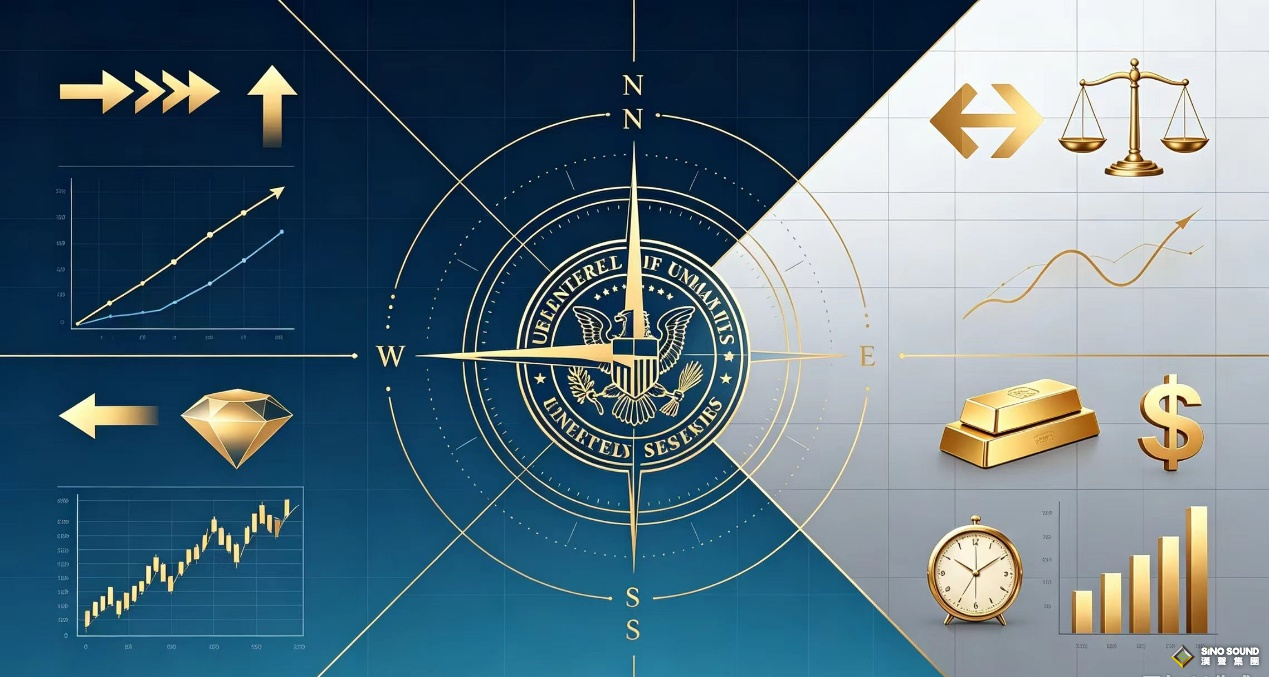
The Federal Open Market Committee (FOMC) typically holds eight meetings per year, setting directions on the federal funds rate, statement wording and quarterly dot plot. There are 12 voting seats: 7 governors plus the President of the New York Fed serve as permanent core members. The remaining four seats rotate among presidents of the 11 regional Federal Reserve Banks — one seat each for Boston/Philadelphia/Richmond, Cleveland/Chicago, Atlanta/St. Louis/Dallas, and Minneapolis/Kansas City/San Francisco. The rotation mechanism brings regional economic conditions from manufacturing, energy and real estate sectors into Washington. Nevertheless, inflation targets, employment gaps and financial conditions ultimately set the policy tone. Markets are highly sensitive to the "median dot plot" and subtle wording used by the Chair during press conferences.
History Repeatedly Proves: Expectation Gap Matters More Than Decisions
After the 2008 financial crisis, the Fed cut rates to near zero and launched QE, which pushed real yields sharply lower. London Gold surged to roughly $1920 per ounce in 2011. In 2013, merely Bernanke’s hint of "possible future tapering of bond purchases" triggered the taper tantrum and a gold price slump. Amid the 2020 pandemic shock, rates returned to 0–0.25% paired with unlimited quantitative eASIng. Flooding liquidity drove gold to hit a record near $2075. Conversely, aggressive rate hikes in 2022–2023 strengthened the US dollar and weighed heavily on gold. When the "higher-for-longer" narrative eased, gold prices rebounded rapidly. It can be seen that London Gold often trades on the mantra "buy the rumor, sell the fact": prices rise as dovish expectations build up, and profit-taking may occur once the policy is delivered without further dovish surprises.
Therefore, investors tracking Fed policy should not only focus on 25-bASIs-point rate hikes or cuts in isolation. They need to observe inflation trends, the pace of cooling employment, balance sheet runoff and shifts in the dot plot. Monetary policy transmits through four channels: the US Dollar Index, real interest rates, inflation expectations and risk aveRSIon sentiment, ultimately driving every price movement on the London Gold chart.
[Copyright Notice]This article is original content and is protected by applicable copyright laws. Any reproduction, distribution, citation, or use of this content must clearly acknowledge the original source:
Gold2U
www.gold2u.com
We reserve all rights and may take legal action against any individual or entity that fails to comply with this notice or otherwise infringes our intellectual property rights.